
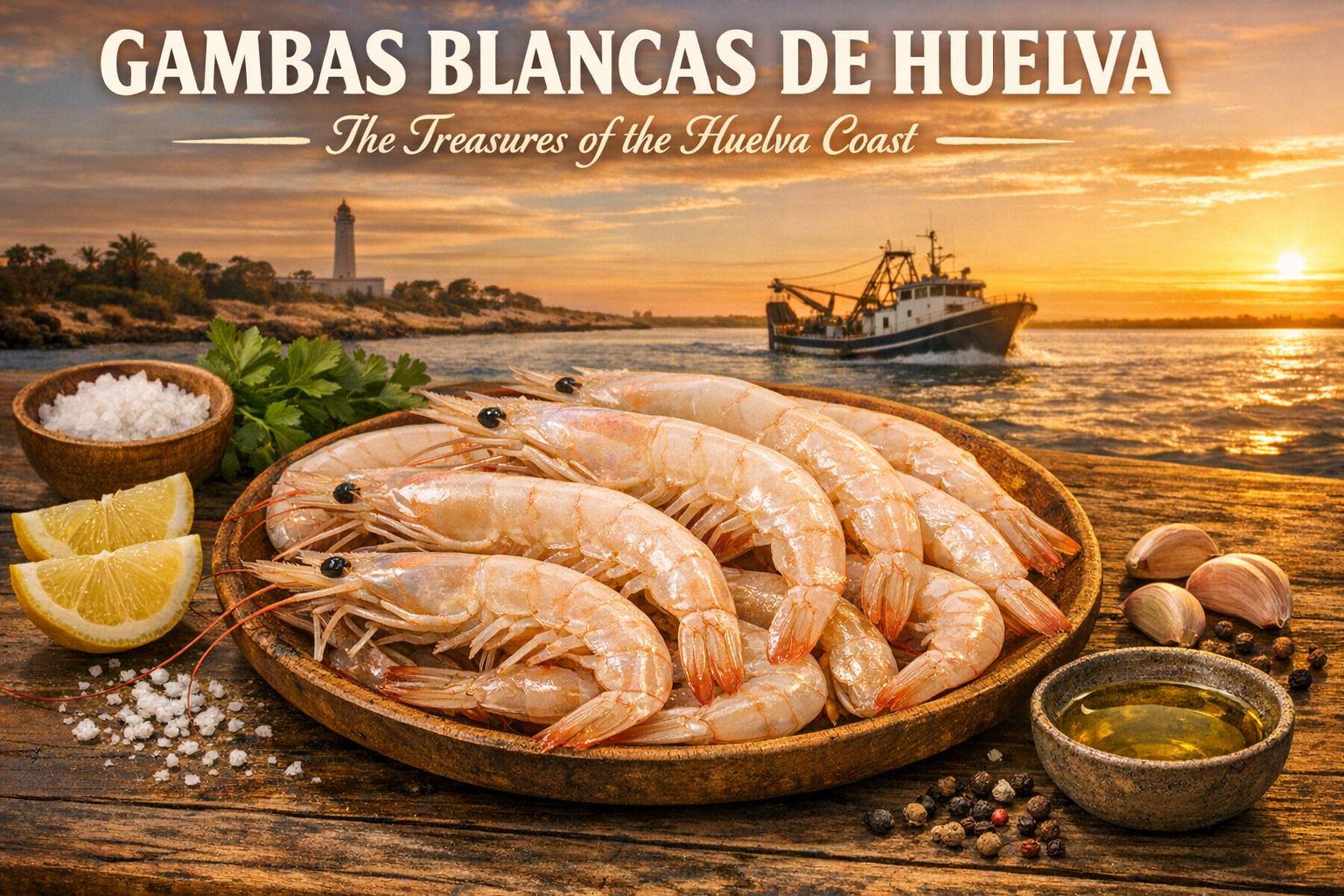
The Gambas Blancas de Huelva, commonly referred to as white prawns from Huelva, occupy a distinct and highly regarded place within Spanish gastronomy. Sourced from the Atlantic waters off the province of Huelva in southwestern Spain, these prawns are widely appreciated for their refined flavor, delicate texture, and culinary adaptability. Their reputation extends beyond regional boundaries, making them one of the most recognized seafood products in the country. The prominence of this species is not accidental but rather the result of a combination of environmental conditions, fishing traditions, commercial organization, and longstanding culinary practices.
Situated along the Gulf of Cádiz, Huelva benefits from a meeting of Atlantic currents that contribute to a marine ecosystem rich in nutrients. This environment creates optimal conditions for various species of shellfish, including the white prawn scientifically known as Parapenaeus longirostris. Over decades, consistent quality and careful management have solidified the standing of this prawn as a product closely associated with its geographic origin. The name itself has become an indicator of provenance and quality within Spanish markets.
The physical characteristics of Gambas Blancas de Huelva clearly distinguish them from other prawns found in both Atlantic and Mediterranean waters. They are generally medium-sized, with slender bodies and a characteristic pale pink to translucent white coloration. Their shells are fine and smooth, while the flesh inside remains firm yet tender after cooking. Unlike larger tiger prawns or deep-water red prawns, white prawns from Huelva possess a refined and subtle sensory profile.
The flavor is often described as mildly sweet with a clean, marine freshness. This sweetness does not overwhelm but instead integrates naturally into a wide range of culinary preparations. The delicate salinity inherent to their flesh reflects the composition of the waters in which they grow. When cooked properly, the texture becomes supple without losing its structure, allowing the prawn to remain intact whether served whole or peeled.
The specific taste profile can be traced to environmental influences. The Gulf of Cádiz is characterized by a mixture of nutrient-rich Atlantic currents and sediment from nearby river estuaries, particularly the Guadiana and Odiel rivers. These conditions promote plankton growth, forming a stable food source for prawns. The combination of diet, water temperature, and salinity levels contributes to the distinctive qualities that differentiate these prawns from similar species harvested elsewhere.
Size grading also plays a role in market classification. The prawns are typically sorted according to uniformity and count per kilogram. Larger specimens may be reserved for premium presentations, while smaller sizes are used in cooked seafood displays or incorporated into dishes. Despite variations in size, quality standards aim to maintain consistency in freshness and texture.
The harvesting of Gambas Blancas de Huelva is closely linked to the traditional fishing communities of the region. Fishing vessels operate primarily from ports such as Huelva, Isla Cristina, and Punta Umbría. Most boats are relatively small to mid-sized trawlers designed for coastal and nearshore fishing. Their scale allows for regular monitoring of catch volumes and adherence to regulatory frameworks established by Spanish and European fisheries authorities.
Sustainability practices have become increasingly central to the prawn industry. Catch quotas, seasonal restrictions, and designated fishing zones are implemented to prevent overexploitation. Authorities monitor stock levels and reproductive cycles to determine appropriate harvest periods. These measures are intended to maintain stable populations and ensure long-term viability of the species in local waters.
Selective fishing techniques and gear modifications contribute to minimizing unintended bycatch. Compliance with environmental standards supports both ecological preservation and the commercial reputation of the product. Maintaining a clean marine habitat is essential not only for the prawn population but also for the broader ecosystem upon which the regional fishing economy depends.
Once landed, the prawns are typically auctioned at local fish markets known as lonjas. The process emphasizes rapid handling and temperature control. Freshness is a primary quality indicator, and proper cold-chain management is crucial from the moment of capture through distribution. In many cases, the prawns reach national markets within hours of landing, preserving their distinctive characteristics.
Within Spanish cuisine, Gambas Blancas de Huelva are valued for their versatility and adaptability to both simple and more elaborate preparations. Unlike certain seafood varieties that require extensive seasoning, these prawns are often prepared in ways that maintain their natural flavor. The most traditional preparation involves boiling them briefly in salted water, sometimes infused with bay leaves. After cooking, they are cooled quickly, often in ice water, to preserve firmness and stop further cooking.
Another common preparation is grilling on a flat surface with minimal oil and a light sprinkling of sea salt. This method enhances the natural sweetness of the prawn while giving slight caramelization to the shell. Because the flavor profile is delicate, heavy sauces are generally avoided. The objective is to allow the inherent characteristics of the seafood to remain prominent.
In tapas culture, white prawns are frequently served simply piled on a plate, either peeled or unpeeled, accompanied by lemon wedges. They may also be incorporated into mixed seafood platters. In rice dishes such as paella or arroz caldoso, they contribute subtle depth without dominating other ingredients. Similarly, in seafood stews, their texture allows them to absorb surrounding flavors while retaining their structural integrity.
Beyond traditional applications, contemporary chefs employ these prawns in refined culinary contexts. They may appear in carpaccio-style preparations, lightly marinated, or combined with seasonal vegetables to create balanced compositions. In some modern interpretations, the prawn heads are utilized to produce concentrated broths or emulsions, reducing waste and intensifying marine notes in sauces.
The culinary versatility of Gambas Blancas de Huelva has contributed significantly to their continued demand. They function equally well as a central feature of a meal or as a complementary ingredient. Their moderate size and consistent texture allow for predictable cooking results, an important factor in both home kitchens and professional settings.
The economic role of Gambas Blancas de Huelva extends throughout multiple layers of regional activity. Fishing remains a foundational industry in several coastal towns of the province. Employment is generated not only for fishermen but also for auction workers, transport operators, seafood processors, distributors, and restaurant personnel. The prawn trade supports interconnected services ranging from boat maintenance to refrigeration logistics.
In regional markets, the white prawn holds a premium position. Its recognized quality allows producers to maintain competitive pricing relative to imported alternatives. This commercial distinction encourages continued investment in local fisheries and reinforces the association between product origin and perceived excellence.
Culturally, the white prawn has become an emblem of Huelva’s maritime identity. It frequently appears in gastronomic fairs, seafood festivals, and culinary competitions. These events serve both promotional and community-building functions, reinforcing the connection between residents and their coastal environment. The prawn is commonly featured in seasonal celebrations, particularly during summer months when tourism increases along the Andalusian coast.
Restaurants in the region often emphasize local sourcing, highlighting the provenance of their seafood. The mention of Gambas Blancas de Huelva on menus functions as an indicator of authenticity and adherence to regional tradition. This consistent presence in dining culture contributes to the preservation of preparation techniques passed down through generations.
Educational initiatives within culinary schools in Andalusia frequently include instruction on proper handling and preparation of local seafood products. By incorporating white prawns into formal training, institutions help sustain practical knowledge about species-specific cooking methods and quality evaluation.
The sustained reputation of Gambas Blancas de Huelva depends heavily on quality assurance procedures. Visual inspection for color, shell integrity, and clarity of the eyes forms part of routine assessment. Fresh specimens exhibit firmness and a mild ocean scent without any strong or undesirable odors. Proper storage at low temperatures immediately after capture is critical for maintaining these characteristics.
Local authorities collaborate with fisheries organizations to monitor compliance with hygiene and traceability standards. Documentation from catch to sale enables buyers to verify origin and date of landing. This traceability strengthens consumer confidence and protects the product from mislabeling or substitution.
National and international demand has increased over time, particularly within high-end food markets. Export channels extend to various European countries where Spanish seafood holds a recognized position. Despite expansion into broader markets, preserving regional control over production remains a central objective to prevent quality dilution.
The sustainability of Gambas Blancas de Huelva depends on maintaining the ecological conditions that support their growth. Ongoing scientific observation monitors population dynamics, reproductive patterns, and environmental indicators such as water temperature and salinity shifts. Climate variability represents a factor requiring continued assessment, as changes in ocean conditions can influence migration patterns and stock levels.
Technological improvements in fishing equipment aim to increase efficiency while reducing seabed disturbance. By refining trawling methods and limiting fishing effort, authorities and industry participants seek to balance commercial viability with environmental responsibility. Collaboration between fishermen, marine biologists, and policymakers remains essential in this regard.
The future outlook for white prawns from Huelva appears closely tied to responsible management and preservation of regional identity. Continued emphasis on traceable sourcing, sustainable quotas, and transparent market practices is likely to support long-term stability. Demand for high-quality seafood with defined origin characteristics continues to shape consumer preferences, offering both opportunities and obligations for producers.
In sum, Gambas Blancas de Huelva represent a convergence of natural conditions, traditional fishing expertise, culinary integration, and economic relevance. Their distinctive qualities stem from the Atlantic waters of the Gulf of Cádiz, while their sustained prominence results from regulated harvesting and consistent quality standards. Within Spanish gastronomy, they remain a recognized benchmark for refined seafood, contributing not only to regional cuisine but also to the broader cultural and commercial landscape of Huelva.