
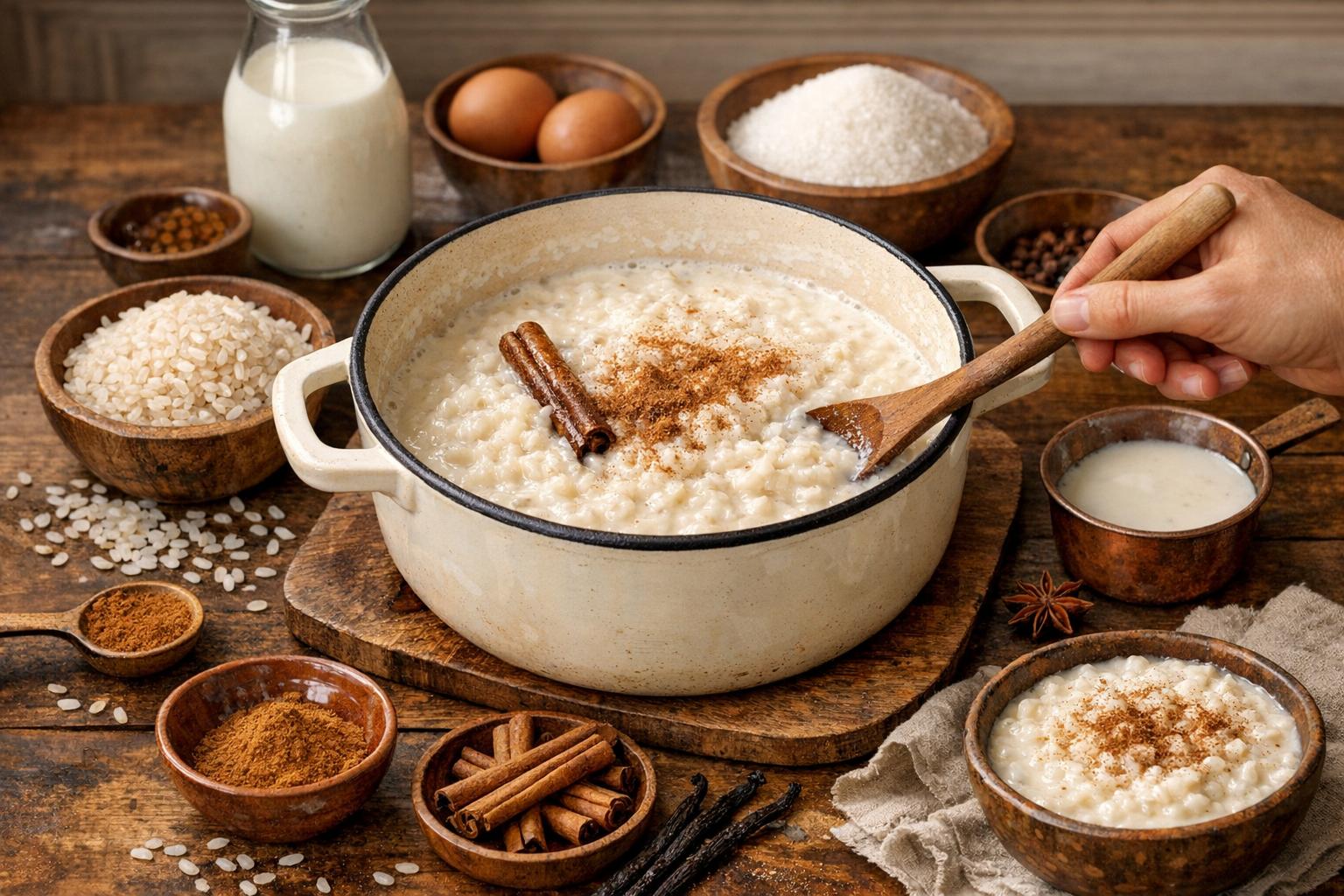
Arroz con leche, widely recognized as rice pudding, is a traditional dessert that has been prepared in households for centuries. Though simple in composition, it represents a significant culinary tradition in many parts of the world. Its foundations can be traced to early rice cultivation and the spread of dairy farming, eventually becoming firmly established in Spanish cuisine and later throughout Latin America. Over time, the dish evolved in response to regional ingredients, cooking methods, and cultural preferences.
At its core, arroz con leche is a preparation of rice slowly simmered in milk and sweetened with sugar. The process transforms basic ingredients into a cohesive dish with a creamy texture and mild sweetness. The addition of spices such as cinnamon and vanilla gives it a recognizable aroma and flavor profile without overwhelming the primary components. Despite variations in preparation, its defining characteristics remain consistency, balanced sweetness, and a soft yet structured texture.
This dessert continues to be prepared in domestic kitchens and professional settings alike. It is served during family gatherings, festive occasions, and everyday meals. Its adaptability has contributed to its continuity across generations, as cooks modify ingredients while preserving the essential method.
The origins of arroz con leche are closely linked to the historical expansion of rice cultivation. Rice was introduced into Europe through trade routes and agricultural exchanges involving the Middle East and North Africa. In Spain, particularly in regions influenced by Moorish culinary traditions, rice became a staple ingredient in both savory and sweet dishes. The combination of rice with milk and sugar likely emerged as sugar became more widely available.
As Spanish explorers and settlers traveled to the Americas, they brought culinary practices with them. Rice cultivation expanded in parts of Latin America, and the dessert was adapted to local conditions. In Mexico, Peru, Colombia, and other countries, arroz con leche became integrated into national cuisines. While the central idea remained consistent, each region developed its own interpretation, influenced by available dairy products, types of sugar, and customary spices.
In some areas, arroz con leche is associated with specific religious celebrations or seasonal events. In others, it is simply regarded as an everyday dessert. Its longevity reflects the practicality of its ingredients and the ease with which it can be scaled for small families or large gatherings.
The basic components of arroz con leche are rice, milk, sugar, and selected spices. Each ingredient plays a defined role in determining texture, flavor, and consistency.
Rice serves as the structural element. Short-grain or medium-grain rice varieties are typically chosen because of their higher starch content. During cooking, starch molecules are released into the surrounding liquid, thickening the mixture naturally. This gradual release creates the smooth, cohesive texture characteristic of the dish. Long-grain rice can be used, but it often yields a less creamy result unless cooking times are adjusted.
Milk contributes richness and body. Whole milk is frequently preferred due to its fat content, which enhances smoothness. The proteins and lactose in milk also participate in subtle chemical reactions during heating, contributing to flavor development. In some recipes, a portion of the milk is replaced with evaporated milk or condensed milk to intensify creaminess and sweetness.
Sugar provides sweetness and influences texture. When dissolved into the warm mixture, sugar integrates evenly and balances the mild flavor of rice. The level of sweetness varies according to custom and personal preference. Some cooks incorporate the sugar gradually to maintain control over the final taste.
Spices such as cinnamon sticks and vanilla extract introduce a mild aromatic complexity. Cinnamon sticks are often simmered directly in the milk, allowing their flavor to diffuse slowly. Ground cinnamon may also be sprinkled on top before serving. Vanilla extract is typically added toward the end of cooking to preserve its fragrance. Additional spices such as nutmeg, cloves, or citrus zest may appear in certain variations.
The preparation of arroz con leche is methodical rather than complex. Proper attention to temperature control, stirring frequency, and ingredient timing ensures consistent results.
The rice is usually rinsed first to remove excess surface starch. This step prevents clumping and promotes even cooking. The rinsed rice is then simmered in water until partially softened. Pre-cooking in water reduces overall cooking time and allows the grains to expand before milk is introduced.
Once the water has mostly evaporated or been absorbed, warm milk is gradually added. Some cooks warm the milk separately before incorporating it, maintaining a steady temperature in the cooking vessel. The mixture is brought to a gentle simmer and stirred regularly. Continuous stirring prevents the rice from settling at the bottom and scorching, especially as the milk thickens.
Sugar and spices are typically added during the simmering stage. Adding sugar too early may slightly slow the cooking process, as sugar interferes with starch gelatinization. Therefore, many traditional methods recommend incorporating it once the rice is nearly tender. Cinnamon sticks remain in the pot while simmering and are removed before serving.
The mixture is cooked until it reaches a thick yet pourable consistency. It should coat a spoon without appearing dry. After removal from heat, the pudding continues to thicken as it cools due to ongoing starch stabilization. If a thinner consistency is desired, additional warm milk can be stirred in before serving.
Texture is central to the identity of arroz con leche. The balance between fluidity and solidity depends on several controllable variables. The ratio of rice to liquid influences the final result; a higher proportion of milk yields a looser pudding, while a greater concentration of rice produces a denser mixture.
Cooking time also affects texture. Extended simmering breaks down rice grains more completely, generating a thicker consistency. Shorter cooking times preserve greater grain definition. Regional preferences vary in this respect. Some traditions favor a smoother mixture with partially dissolved grains, while others prefer the rice to retain its individual structure.
Temperature management is equally important. Simmering at excessively high heat can cause milk proteins to coagulate unevenly or stick to the bottom of the pot. A steady, moderate heat encourages proper starch release and prevents unwanted scorching. Stirring intervals should be frequent enough to maintain uniform heat distribution without disrupting the rice grains too aggressively.
Arroz con leche offers a combination of carbohydrates, fats, and proteins derived primarily from rice and milk. Rice supplies complex carbohydrates that provide energy. Milk contributes protein, calcium, and varying amounts of fat depending on the type used. Sugar increases caloric content but can be adjusted based on dietary considerations.
Though typically categorized as a dessert, modifications can alter its nutritional composition. Substituting part of the sugar with alternative sweeteners or reducing overall quantity lowers sugar intake. Using low-fat milk reduces overall fat content while maintaining protein and mineral contributions. The nutritional profile ultimately depends on ingredient choices and portion size.
Arroz con leche may be served warm, at room temperature, or chilled. Temperature preference often reflects regional custom or seasonal climate. When served warm, the texture appears softer and more fluid. Chilling the pudding allows it to firm, producing a thicker consistency suitable for slicing or spooning in molded shapes.
Garnishing typically involves a modest dusting of ground cinnamon across the surface. This addition intensifies aroma and visually distinguishes the dish. Some cooks incorporate raisins during cooking, allowing them to plump within the warm milk. Others add fruit slices, toasted nuts, or a light topping of whipped cream for added contrast.
Presentation is generally uncomplicated. The pudding may be portioned into small bowls, glass cups, or ceramic dishes. In certain settings, it is prepared in large communal trays and served with a ladle. The simplicity of presentation aligns with the humble origins of the dish.
Across different countries, arroz con leche reflects local ingredients and culinary traditions. In Mexico, it is common to include both cinnamon sticks and vanilla, sometimes accompanied by sweetened condensed milk for additional richness. In Peru, cloves may be introduced alongside cinnamon, and the dessert is sometimes paired with mazamorra morada, a purple corn pudding, creating a dual presentation.
Caribbean versions often feature coconut milk in place of or in addition to dairy milk. The natural sweetness and fat content of coconut milk alter the flavor profile and produce a slightly different texture. In Spain, lemon peel is frequently added during simmering, contributing a subtle citrus note that balances the sweetness.
These variations demonstrate the adaptability of arroz con leche. Despite geographic differences, each version maintains the essential technique of slow cooking rice in sweetened milk.
Modern dietary preferences and restrictions have led to numerous adaptations. For individuals who avoid lactose, plant-based milks such as almond, soy, or oat milk can replace cow’s milk. Coconut milk is another widely used alternative that provides comparable richness. When adjusting recipes, it is important to consider differences in sugar content and fat composition, as these influence both sweetness and thickness.
Sugar alternatives may also be incorporated. Honey, agave syrup, or other sweeteners can substitute for granulated sugar, though each contributes its own flavor characteristics. Adjustments in quantity may be required to achieve the intended balance.
For those seeking increased nutritional value, additions such as chia seeds or small amounts of ground flaxseed may be incorporated. These ingredients subtly affect texture, making careful measurement necessary.
Arroz con leche should be stored in airtight containers if not consumed immediately. Refrigeration slows microbial growth and preserves quality for several days. As it rests, the pudding continues to thicken. Before serving leftovers, a small amount of milk can be stirred in to restore a softer texture.
Freezing is possible but may alter consistency. The rice grains can become slightly grainier upon thawing due to changes in starch structure. Gentle reheating with added liquid helps mitigate this effect.
Proper storage ensures that the dish maintains both flavor and safety. Observing standard food handling practices, such as cooling promptly and limiting room temperature exposure, is recommended.
Arroz con leche remains a widely prepared dessert because of its straightforward method, accessible ingredients, and adaptability. Its evolution from early rice-based dishes to contemporary variations demonstrates its resilience within diverse culinary contexts. By understanding ingredient functions, cooking techniques, and regional adaptations, cooks can prepare versions that align with tradition or contemporary dietary needs. The continuity of arroz con leche across centuries underscores its practicality and enduring culinary relevance.