
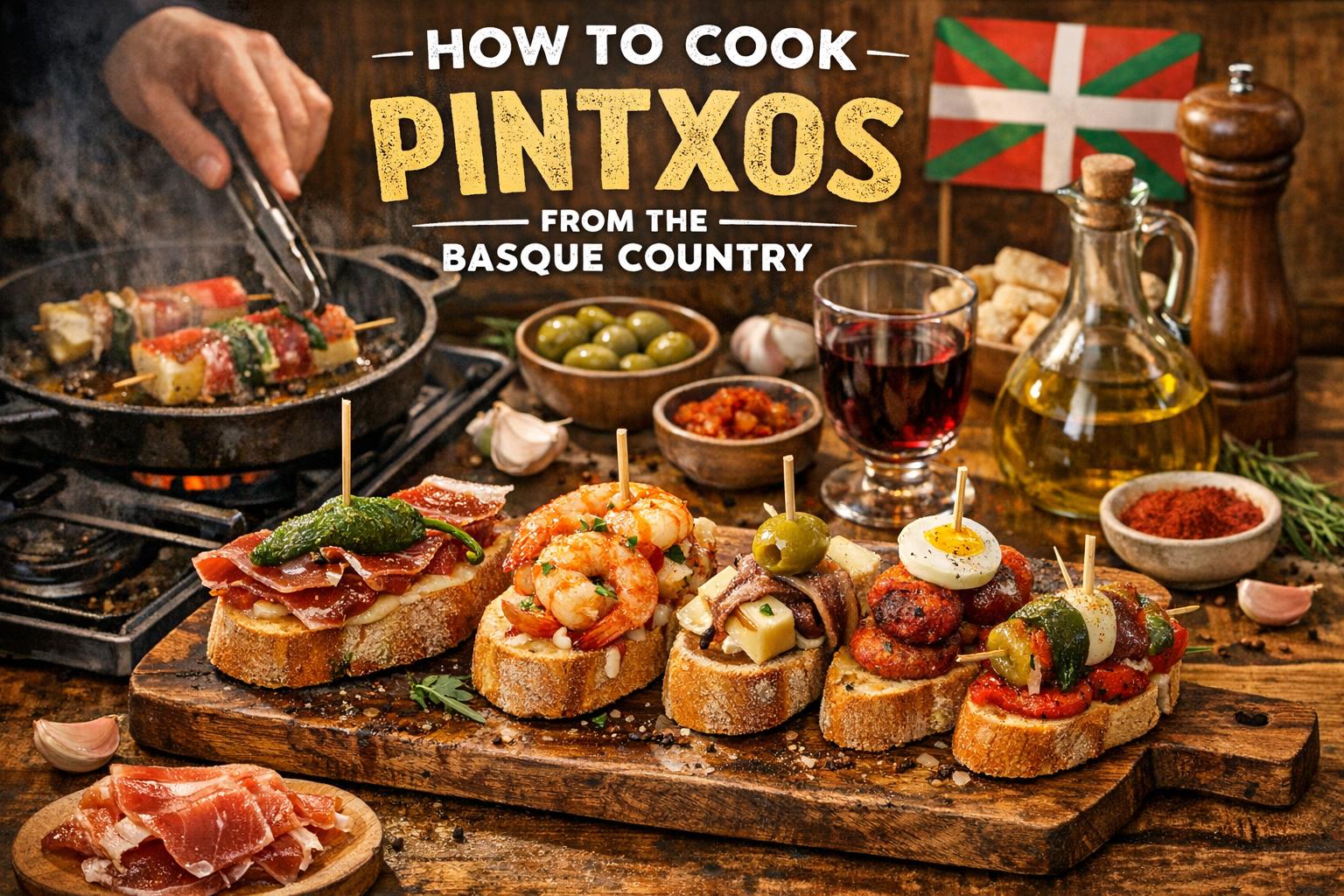
In the Basque Country, pintxos are a central element of everyday culinary life. These small preparations, typically served on a slice of bread and secured with a skewer or toothpick, are designed to be eaten in one or two bites. While they are often compared to tapas, pintxos form a distinct tradition with their own customs, presentation styles, and ingredient combinations. The word pintxo derives from the Spanish verb pinchar, meaning “to pierce,” referring to the skewer that holds the components together.
Pintxos are commonly displayed along bar counters in cities such as San Sebastián, Bilbao, and Vitoria-Gasteiz. Guests choose from a variety of options, and the toothpicks traditionally help staff count how many have been consumed. Although the concept appears simple, the preparation of pintxos requires attention to balance, proportion, and product quality. This guide explains how to prepare traditional pintxos while offering context about their ingredients, techniques, and presentation.
Several features distinguish pintxos from other small-format dishes. First, they often emphasize high-quality ingredients in relatively small quantities. Because each piece is compact, every element must contribute flavor and texture. Second, many pintxos are assembled shortly before serving to maintain freshness. The bread base should remain crisp rather than soggy, and toppings should retain their distinct textures.
In contemporary Basque cuisine, pintxos range from rustic combinations to modern interpretations incorporating refined techniques. However, traditional pintxos remain rooted in accessible components such as cured meats, salted fish, marinated vegetables, and regional cheeses. Understanding these foundations allows for both faithful replication and thoughtful adaptation.
A well-prepared pintxo begins with proper ingredients. Bread is fundamental, typically a baguette-style loaf with a firm crust and airy interior. The crumb should be light enough to avoid heaviness yet structured enough to support toppings without collapsing. Freshness is important, as stale bread can compromise both flavor and texture.
Olive oil is another essential component. A good-quality extra virgin olive oil adds aroma and richness. Light brushing or drizzling enhances both the flavor and crispness of toasted bread. In the Basque Country, olive oil is used with restraint to complement rather than dominate the toppings.
Proteins frequently featured in pintxos include jamón ibérico, chorizo, anchovies, tuna preserved in olive oil, salt cod, and occasionally grilled seafood such as prawns or squid. Cheeses such as manchego or Idiazabal provide contrast with their firm texture and nutty flavor. Vegetables also play a central role, particularly piquillo peppers, olives, tomatoes, and sautéed mushrooms.
Regional authenticity can be enhanced by incorporating ingredients typical of northern Spain. Cantabrian anchovies are valued for their balanced saltiness and firm texture. Piquillo peppers, roasted and peeled, offer sweetness and mild smokiness. Idiazabal cheese, made from sheep’s milk, introduces subtle earthy notes characteristic of Basque gastronomy.
Proper preparation ensures that pintxos maintain structural integrity and visual appeal. Begin by slicing the baguette into even rounds approximately half an inch thick. Consistent thickness promotes uniform toasting and stability. Lay the slices on a baking sheet and lightly brush one side with olive oil.
Toast the bread in a preheated oven until it develops a golden surface while remaining slightly tender inside. Over-toasting can make the bread difficult to bite through once topped and skewered. The objective is a crisp exterior that supports moisture from ingredients such as peppers or cured meats.
While the bread cools slightly, prepare toppings. Slice cheeses thinly enough to be manageable in a single bite. Drain preserved seafood carefully to avoid excess oil. If using fresh vegetables, ensure they are dried thoroughly to prevent softening the bread. Organizing the components in advance streamlines assembly and maintains efficiency.
Pintxos provide flexibility in flavor composition. Classic pairings emphasize balance between saltiness, sweetness, acidity, and richness. Though innovation is common in modern bars, traditional combinations remain widely appreciated for their clarity of taste and straightforward preparation.
This combination represents simplicity in practice. To prepare, place a thin slice of jamón ibérico over the toasted bread. The ham should be brought to room temperature before serving to enhance its aroma and texture. Add a small wedge or shard of manchego cheese. The cheese should complement rather than overwhelm the ham, so moderate portions are essential.
Secure the elements with a toothpick inserted vertically through the center. A minimal drizzle of olive oil can be added, though the natural fat of the ham often provides sufficient richness. The resulting pintxo delivers saltiness from the cured meat and subtle nuttiness from the cheese, anchored by crisp bread.
Anchovies are a defining ingredient in many Basque bars. Select high-quality fillets preserved in olive oil. Pat them lightly to remove excess oil before placing them on the bread. Beneath each anchovy, position a strip of roasted piquillo pepper. The pepper’s sweetness offsets the anchovy’s salinity.
For additional complexity, a small dab of garlic paste or finely chopped parsley may be added. Some variations include a slice of hard-boiled quail egg for further contrast. When assembling, ensure that the anchovy lies flat and does not extend excessively beyond the bread’s edge. Secure with a skewer to maintain alignment.
Tortilla Española, a Spanish omelet made primarily from eggs and potatoes, adapts well to pintxo form. Prepare the tortilla in advance and allow it to cool slightly so it can be cut cleanly. Slice it into small squares or wedges sized to match the bread base.
Place the tortilla piece atop the toasted slice and insert a toothpick. Some cooks add a thin layer of mayonnaise or roasted pepper beneath the tortilla for added moisture, though traditional preparations may omit additional sauces. The tortilla’s soft texture contrasts with the crisp bread, creating variation within each bite.
Another well-known traditional pintxo is the Gilda, composed of olives, anchovies, and pickled green peppers threaded directly onto a skewer. Although it may be served without bread, it is often presented alongside it. The combination emphasizes acidity, salt, and slight heat. To prepare, alternate a green olive, a folded anchovy, and a strip of pickled pepper on a toothpick. The sequence can be repeated for a compact but flavorful skewer.
Achieving balance in pintxos requires attention to proportion. Because each piece is small, excess topping can overwhelm the bread. Conversely, insufficient coverage may result in dryness. Ideally, the bread serves as a foundation while remaining discernible in flavor and texture.
Color contrast also plays a practical role. Bright piquillo peppers against pale bread, dark anchovies beside green olives, or golden tortilla squares create visual definition. In traditional bars, pintxos are arranged in rows or clusters on platters, enabling guests to view the variety clearly.
Temperature management is equally significant. Some pintxos are served at room temperature, particularly those containing cured items. Others, such as sautéed mushrooms with garlic or grilled seafood, are served warm. When serving multiple varieties, group them according to temperature to maintain quality.
The toothpick or skewer is functional as well as symbolic. Insert it vertically or at a slight angle through the center of the toppings and bread. This secures the components and simplifies handling. For heavier toppings such as thick tortilla slices or layered ingredients, a sturdier skewer may be preferable.
Bread choice can be adjusted depending on the topping. Dense mixtures may require slightly thicker slices, whereas lighter ingredients can rest on thinner cuts. If preparing pintxos in advance, store bread and toppings separately and assemble shortly before serving to prevent moisture absorption.
While many pintxos rely on preserved items, seasonal produce can expand possibilities. In summer, ripe tomatoes paired with high-quality olive oil and sea salt create a straightforward option. In autumn, sautéed wild mushrooms with garlic and parsley add depth. Winter variations might include braised meats or salt cod mixed with béchamel, while spring can feature fresh herbs or lightly blanched vegetables.
Seafood-based pintxos reflect the coastal geography of the Basque Country. Small portions of grilled octopus, marinated tuna, or shrimp can be placed atop bread with minimal garnish. These preparations benefit from careful seasoning and immediate serving to preserve texture.
Vegetarian adaptations remain consistent with traditional principles when they emphasize ingredient quality. Roasted peppers with goat cheese, caramelized onions with Idiazabal shavings, or marinated artichoke hearts can provide balanced alternatives without altering the essential structure of bread and skewer.
Once all components are prepared, assemble each pintxo methodically. Place the bread slices on a clean surface and arrange toppings efficiently to minimize handling. Work in small batches to retain freshness. After skewering, transfer each piece to a serving platter.
Traditionally, pintxos are presented in close arrangement along a bar counter or on large trays. If hosting at home, arrange them in orderly rows grouped by type. Ensure sufficient spacing for guests to pick them up easily without disturbing adjacent pieces.
Accompaniments are usually simple. Lightly chilled white wines, sparkling wines, or cider are commonly served alongside. The purpose of beverages is to complement rather than overshadow the flavors of the food.
Before serving, assess each pintxo for seasoning. A light sprinkle of coarse sea salt may be appropriate for vegetables or tomatoes. Freshly cracked black pepper can enhance cheese-based options. Use additional olive oil sparingly to avoid saturating the bread.
Attention to detail in the final stage reinforces quality. Remove excess oil pooling on the plate, wipe edges if necessary, and ensure skewers are securely inserted. These small adjustments contribute to a clean and organized presentation.
Pintxos originated as straightforward combinations intended to accompany drinks in local taverns. Over time, chefs in the Basque region refined the concept, introducing layered constructions and culinary techniques associated with fine dining. Despite these developments, the traditional bread-based pintxo remains prevalent and widely appreciated.
In cities such as San Sebastián, establishments often specialize in particular items while also offering a standard selection. The practice of moving from one bar to another sampling different pintxos, known as txikiteo, remains a common social activity. Understanding this context can guide preparation choices, emphasizing manageable portions and variety rather than single large servings.
Preparing pintxos from the Basque Country involves combining high-quality ingredients with straightforward methods. A crisp slice of bread, balanced toppings, and careful assembly form the core structure. Traditional combinations such as jamón with manchego, anchovy with piquillo pepper, and tortilla Española illustrate the importance of proportion and clarity in flavor.
While established recipes offer reliable guidance, the format allows for seasonal adaptation and thoughtful experimentation. By focusing on ingredient integrity, structural stability, and measured presentation, pintxos can be incorporated into a range of dining contexts. Their enduring presence in Basque culinary culture reflects both practicality and respect for regional products, making them a versatile addition to contemporary kitchens.