
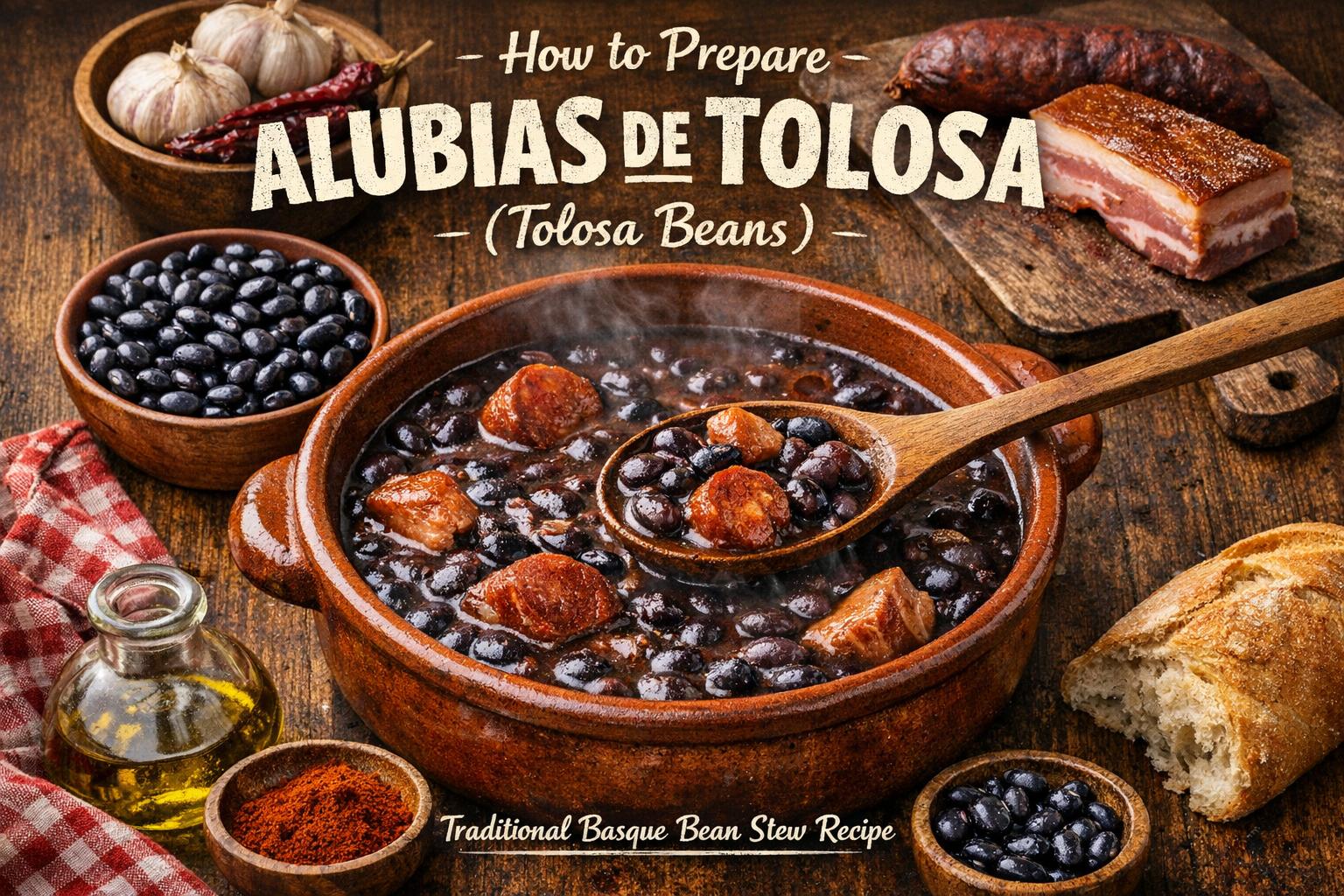
Alubias de Tolosa, commonly referred to as Tolosa beans, are a distinctive variety of dark red to almost black beans cultivated in the Basque Country of northern Spain. They are particularly associated with the town of Tolosa in the province of Gipuzkoa, where they have been grown and appreciated for generations. Known for their thin skin, dense interior, and smooth, creamy consistency when cooked, these beans occupy an important place in regional gastronomy.
Unlike many other legumes, Alubias de Tolosa are valued not only for their nutritional properties but also for their culinary behavior. When prepared correctly, they retain their shape while developing a velvety texture in the cooking liquid. Their subtle, earthy flavor is often described as clean and balanced, making them adaptable to simple preparations that highlight their inherent qualities. Traditional recipes aim to preserve this natural taste rather than mask it with excessive seasoning.
The cultivation of Alubias de Tolosa follows seasonal agricultural rhythms. Typically planted in late spring and harvested in early autumn, the beans benefit from the humid Atlantic climate of the Basque region. This environment contributes to their characteristic texture and flavor. In many local markets, dried beans from the most recent harvest are sold with attention to provenance, underscoring their status as a regional specialty.
In Basque culinary tradition, Alubias de Tolosa are often associated with communal meals and seasonal gatherings. They are commonly served in colder months, when hearty, slow-cooked dishes are particularly valued. Restaurants in Tolosa frequently dedicate specific days of the week to preparing these beans according to traditional methods, reinforcing their cultural importance.
One of the defining characteristics of this dish is its straightforward preparation. The beans themselves are considered the focal point. While additional ingredients such as chorizo or morcilla may accompany them, the overall approach emphasizes restraint. The goal is to respect the ingredient and allow time and careful technique to develop depth of flavor.
The preparation style also reflects broader Basque culinary philosophies. Cooking is often methodical, with attention paid to the quality of raw materials and controlled heat. This measured approach ensures that the beans cook evenly and achieve their desired creamy consistency without splitting or becoming waterlogged.
To prepare a classic dish featuring Alubias de Tolosa, the ingredient list remains concise:
The simplicity of these ingredients reflects the intention to allow the beans to dominate the dish. Extra virgin olive oil contributes structure and subtle fruitiness. Onion and garlic provide an aromatic base without overpowering the primary component. Bay leaves add a mild herbal background note that integrates into the cooking liquid over time.
When including chorizo or morcilla, it is customary to serve them either cooked within the pot or prepared separately and presented alongside the beans. Their presence offers a contrast in flavor and texture but remains secondary to the legume itself.
Soaking the Beans: The preparation begins the day before cooking. Place the dried Alubias de Tolosa in a large bowl and cover them completely with cold water. The beans will gradually absorb moisture and expand, so sufficient water is needed to keep them submerged throughout the soaking period. Typically, an overnight soak of eight to twelve hours is sufficient.
Soaking hydrates the beans evenly, which promotes consistent cooking. It also reduces the overall simmering time. After soaking, the beans should be drained and rinsed gently under fresh water to remove any residual starch.
Initial Cooking: Transfer the soaked beans to a large, heavy-bottomed pot and cover them with fresh cold water. The water level should rise several centimeters above the beans. Add a couple of bay leaves at this stage. Slowly bring the pot to a boil over medium heat. Once bubbles begin to form, reduce the heat immediately to maintain a gentle simmer.
Maintaining a steady, low simmer is a fundamental aspect of the process. Vigorous boiling can cause the beans to break apart and detach from their skins. A gradual cooking method encourages the beans to soften uniformly and develop a creamy broth. During the initial stages, foam may rise to the surface; this can be skimmed off with a spoon for clarity.
Sautéing: While the beans begin to cook, prepare the aromatic base. Finely chop the onion and garlic cloves. In a separate pan, heat a tablespoon of extra virgin olive oil over moderate heat. Add the onion first, allowing it to cook slowly until translucent and lightly golden. Stir regularly to prevent browning too quickly. Introduce the garlic toward the end of the process, cooking just long enough to release its fragrance without scorching.
This step concentrates flavors and adds depth to the overall dish. Cooking the onion and garlic separately ensures that they are properly softened before being incorporated into the beans. Once ready, transfer this mixture into the pot, stirring carefully to distribute it evenly.
Continuing the Cook: Season the pot with a measured amount of salt and freshly ground pepper. It is advisable to add salt in moderation at this stage, adjusting later as the liquid reduces and flavors intensify. If chorizo or morcilla are included, they may be added whole or in large pieces to avoid excessive fat dispersal into the broth. Some cooks prefer to prick the sausage casing slightly to allow gradual release of flavor.
Throughout the cooking process, monitor the liquid level. If necessary, add small amounts of hot water to keep the beans submerged. Adding cold water can interrupt the cooking rhythm and affect texture. Gentle stirring occasionally helps prevent sticking, though excessive agitation should be avoided.
The simmering phase typically lasts between two and three hours, depending on the freshness of the beans and the soaking duration. During this time, the beans slowly absorb the surrounding liquid while releasing natural starches that thicken the broth. The objective is a consistency that coats the spoon without appearing overly dense.
As the beans cook, evaluate their texture periodically. A properly cooked Alubia de Tolosa should be tender throughout but maintain structural integrity. The skin should remain intact, enclosing a creamy interior. If the beans seem firm, continue simmering patiently rather than increasing the heat.
In traditional preparation, the pot is sometimes shaken gently instead of stirred with a utensil. This technique minimizes mechanical damage while ensuring even movement within the pot. Controlling the cooking environment in this way preserves both appearance and mouthfeel.
Simmering: In the final stages, taste the cooking liquid and adjust the seasoning gradually. The flavors should be balanced, with the mild sweetness of the onion complementing the earthiness of the beans. If sausages were cooked in the pot, they can be removed, sliced, and returned or served separately.
Allow the beans to rest briefly off the heat before serving. Resting stabilizes the starches and gives the broth time to settle into its finished consistency. Some cooks find that the dish benefits from being prepared several hours in advance and reheated gently, as this resting period further integrates flavors.
Finishing Touches: Immediately before serving, remove the bay leaves. If desired, drizzle a small amount of high-quality extra virgin olive oil over the surface to enhance aroma. The presentation is traditionally simple, often in earthenware dishes that retain warmth.
Alubias de Tolosa are typically served as a main course. In traditional Basque settings, the beans are accompanied by boiled or pickled vegetables such as cabbage or piparras, mild green peppers preserved in vinegar. These elements provide contrast without overshadowing the primary dish.
Hearty bread is commonly placed on the table, allowing diners to absorb the thickened broth. A simple green salad dressed with olive oil and vinegar can introduce freshness and balance to the meal. The overall service style emphasizes moderation and clarity of flavor.
In some households, the sausages are served on a separate platter, enabling individuals to combine bites of meat and beans according to preference. This method maintains the visual distinction between components while reinforcing their complementary nature.
From a nutritional perspective, Alubias de Tolosa provide plant-based protein, dietary fiber, and complex carbohydrates. They also contain essential minerals such as iron and potassium. When prepared with moderate amounts of olive oil and limited processed meats, the dish aligns with principles commonly associated with Mediterranean dietary patterns.
The beans’ high fiber content supports satiety and digestive health. Their protein composition makes them a suitable option for balanced meals, particularly when paired with whole-grain bread or vegetables. Adjusting the quantity of added sausage can modify the overall fat and sodium content according to individual dietary needs.
Preparing Alubias de Tolosa according to traditional methods requires time and controlled technique rather than elaborate ingredients. The process centers on soaking, gentle simmering, and careful seasoning. Each stage contributes to preserving the beans’ thin skin and creamy interior.
As a representative dish of the Basque Country, Alubias de Tolosa demonstrate how regional ingredients and deliberate preparation can create a meal defined by texture and balance. Whether served in a family kitchen or a local restaurant in Tolosa, the emphasis remains on highlighting the qualities of the bean itself.