
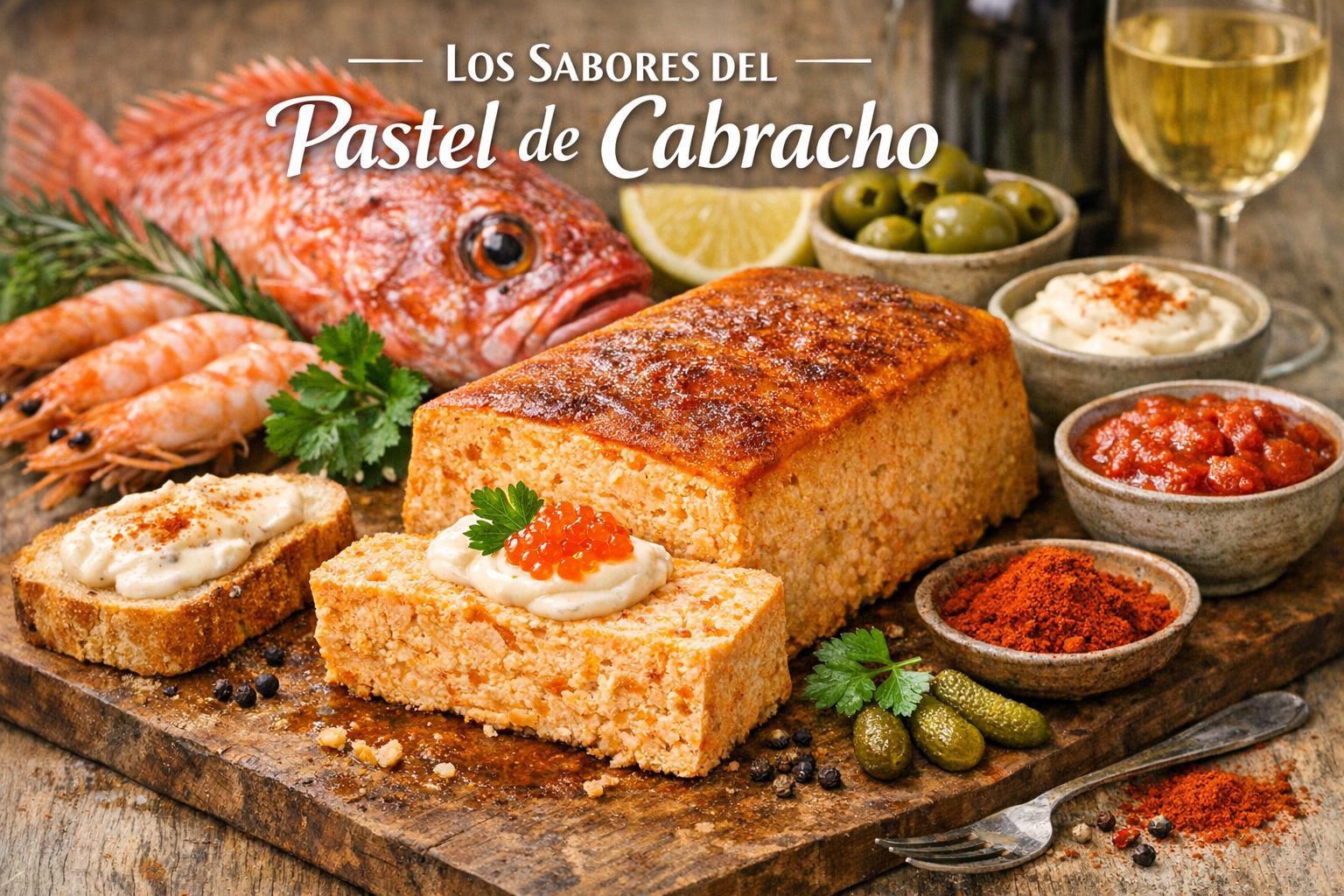
Pastel de cabracho, often translated as rockfish cake, is a traditional preparation from the northern coastal regions of Spain, especially Asturias and parts of the Basque Country. It represents a culinary approach rooted in local fishing practices, seasonal availability, and the preservation of seafood through careful cooking and cooling techniques. Although frequently described as a savory fish pâté or terrine, pastel de cabracho has a distinct identity shaped by its ingredients, preparation method, and manner of service.
The dish is typically served as a starter or as part of a spread of small plates. Its texture is smooth yet structured, holding its shape when sliced. Unlike many fish dishes that are served hot and freshly prepared, pastel de cabracho is usually presented chilled, allowing it to be prepared in advance and served in neat portions. This practical aspect has contributed to its continued popularity in both homes and restaurants.
The origins of pastel de cabracho are closely tied to the fishing traditions of the Cantabrian Sea. Rockfish, known locally as cabracho, were abundant in these waters. Rather than being reserved solely for simple grilled preparations or fish stews, they were incorporated into more elaborate dishes that reflected regional tastes and techniques. Over time, pastel de cabracho became recognized as a representative example of coastal Spanish cuisine that emphasizes balance, clarity of flavor, and respect for the primary ingredient.
The defining component of pastel de cabracho is cabracho, a firm-fleshed scorpionfish with a pronounced yet refined marine flavor. Its flesh is white and relatively dense, characteristics that make it suitable for blending into a cohesive mixture without losing structure. The fish provides the foundational taste of the dish, offering natural salinity and a subtle sweetness typical of high-quality seafood.
Because cabracho has a distinctive flavor, it does not require extensive masking or heavy seasoning. Instead, the accompanying ingredients are selected to complement and support the fish rather than dominate it. Among these are onions and leeks, which contribute mild sweetness and depth. These vegetables are usually cooked gently to reduce sharpness and to draw out their natural sugars, creating a rounded base note in the final mixture.
Eggs play a structural and textural role. When blended with the fish and other ingredients and then baked, eggs coagulate and provide firmness. They ensure that the cake can be sliced cleanly once chilled. The eggs also help emulsify the mixture, creating a unified consistency rather than a crumbly or uneven interior.
Cream or occasionally evaporated milk is often added to produce a smooth, mousse-like texture. The dairy component softens the assertive characteristics of the fish and vegetables, resulting in a balanced composition. In some variations, tomato is incorporated in small quantities, adding both subtle acidity and a faint color tint that gives the pastel a pale pink hue.
Seasonings are typically restrained. Salt is used with care because the fish itself carries a certain salinity. White pepper is preferred over black pepper for its mild heat and because it avoids visual specks in the finished slice. In certain regional recipes, a small amount of tomato sauce or concentrated tomato purée is blended into the base, contributing mild acidity and body without overwhelming the fish.
The preparation of pastel de cabracho begins with cooking the fish, most often through poaching. Poaching is selected because it gently cooks the flesh while preserving moisture and preventing excessive firmness. The fish is typically simmered in lightly salted water, sometimes along with aromatic vegetables such as onion, carrot, leek, and a bay leaf. This brief cooking stage allows the fish to release flavors into the liquid while remaining tender.
Once cooked, the fish is cooled and carefully deboned. Attention to detail at this stage is essential, as small bones can remain embedded in the flesh of scorpionfish. The cleaned fish is then flaked or finely shredded, preparing it to be incorporated into the base mixture.
Meanwhile, the vegetables are sautéed slowly in oil or butter. This step is not intended to brown them significantly but to soften their texture and develop a mild sweetness. The controlled heat encourages the breakdown of fibrous structures and the gradual release of aromatic compounds, which later disperse evenly throughout the mixture.
The poached fish, sautéed vegetables, cream, eggs, and selected seasonings are then combined. The blending process is deliberate. Some cooks pass the mixture through a food processor to achieve an almost puréed consistency, while others prefer a slightly coarser texture that retains small fragments of fish. The chosen texture influences the final eating experience. A fully blended base yields a refined, almost pâté-like slice, while a less processed version provides more discernible structure.
The mixture is poured into a mold, often a loaf pan or terrine mold lined with parchment or lightly greased. The baking is usually performed in a water bath, or bain-marie, which ensures even heat distribution. The water bath prevents overcooking and reduces the risk of curdling or cracking. During baking, the eggs set and the dairy binds with the fish proteins, transforming the liquid mixture into a cohesive and sliceable form.
As the heat gradually penetrates the mold, the flavors concentrate. Aromatic compounds from the vegetables and herbs diffuse evenly. The gentle cooking process avoids aggressive browning, maintaining a uniform interior color and texture. Once set, the pastel is removed from the oven and allowed to cool gradually before being transferred to refrigeration.
Cooling is not merely a practical step; it plays a critical role in flavor development. As the dish rests, the aromas stabilize and meld. The texture firms, making it easier to cut into clean slices. Chilling also enhances the perception of structure, allowing the cake to maintain its defined edges when served.
Although pastel de cabracho is closely associated with Asturias, similar fish-based terrines and cakes can be found throughout northern Spain. The culinary traditions of this coastline are influenced by abundant seafood, dairy products from inland farming communities, and the longstanding practice of preserving flavors through cooking and cooling.
In the late twentieth century, the dish gained wider recognition due in part to its inclusion in restaurant menus that sought to highlight regional Spanish cuisine. It came to represent a particularly northern interpretation of fish cookery, distinct from the olive oil–heavy, garlic-forward preparations more commonly found in southern Spain.
Despite its growing reputation, pastel de cabracho has remained grounded in local ingredients. In areas where cabracho is less accessible, cooks may substitute other firm white fish such as monkfish or hake. However, purists often maintain that true pastel de cabracho depends on the unique characteristics of rockfish. Its slightly gelatinous texture and concentrated marine flavor differentiate it from substitutes.
While the traditional version of pastel de cabracho is characterized by restraint, subtle modifications are common. Small additions of paprika can introduce mild smokiness and a gentle reddish tint. In northern Spain, paprika is used sparingly to avoid dominating the delicate fish flavor.
Bay leaves are often used in the poaching liquid rather than in the final mixture, imparting a background aroma without leaving visible fragments. A small quantity of white wine may be added either to the poaching liquid or directly into the blended base. The wine contributes acidity and nuance, balancing the richness of the cream and eggs.
Contemporary variations occasionally include other seafood elements. Finely chopped shrimp can be folded into the mixture, introducing a slightly different texture and intensifying the marine profile. Some interpretations incorporate smoked salmon for added depth and color contrast, though this represents a modern adaptation rather than a traditional element.
Another approach involves adjusting the proportion of dairy to fish. Increasing cream yields a softer, more mousse-like consistency, while reducing it results in a denser slice with a stronger fish presence. Each variation reflects the desired balance between firmness and spreadability.
Some cooks prepare individual portions in small molds rather than a single large terrine. This allows for precise plating in restaurant settings and ensures uniform presentation. Regardless of format, the essential structure remains consistent: fish, vegetables, eggs, and cream unified through careful cooking and cooling.
The texture of pastel de cabracho is central to its identity. When properly prepared, it should be smooth without being gelatinous, firm yet not dry. The slice should hold together under light pressure from a fork while yielding easily when cut. Achieving this balance depends on accurate proportions of egg and cream, careful baking, and sufficient chilling time.
The exterior typically reflects the shape of the mold. Some cooks unmold the pastel onto a serving platter, while others slice directly from the pan. Garnishes are generally minimal. A thin layer of mayonnaise or a light tomato-based sauce may be served alongside, offering moisture and mild acidity.
Color plays a supporting role in presentation. The interior is often pale pink or light orange due to the combination of fish and tomato. The uniform appearance signals thorough blending and even cooking. Visible air pockets or cracks suggest uneven heat or overmixing.
Because pastel de cabracho is served cold or at cool room temperature, it is well suited to structured service in restaurants and gatherings. It can be sliced in advance without losing integrity. Its formality and clean lines make it appropriate for both casual and more formal dining environments.
Pastel de cabracho is most commonly presented as an appetizer. Thin slices are arranged on a plate and accompanied by bread slices or crackers. The mild crispness of toasted bread contrasts with the smooth interior of the cake. Neutral accompaniments are preferred so that the flavor of the fish remains prominent.
Light sauces are sometimes provided on the side. A simple mayonnaise, occasionally mixed with a touch of paprika or lemon juice, adds moisture. Tomato-based sauces offer subtle acidity. However, heavy or strongly flavored condiments are generally avoided, as they can obscure the character of the cabracho.
In beverage pairings, a dry white wine with moderate acidity complements the structure and subtle richness of the dish. Wines from northern Spain, including those from coastal vineyards, align particularly well due to their crisp profiles and restrained fruitiness.
When incorporated into a larger meal, pastel de cabracho serves as a composed starter that precedes lighter seafood or vegetable dishes. Its chilled temperature and compact form create a measured opening without overwhelming the palate.
In summary, pastel de cabracho illustrates how regional Spanish cuisine transforms a locally abundant fish into a refined and structured preparation. Through controlled poaching, careful blending, and gentle baking, the distinct qualities of cabracho are preserved and complemented. The integration of vegetables, eggs, cream, and subtle seasonings produces a cohesive dish whose flavors continue to develop as it cools. Its continued presence in both domestic kitchens and professional settings reflects its adaptability, clarity of flavor, and connection to coastal culinary traditions.