
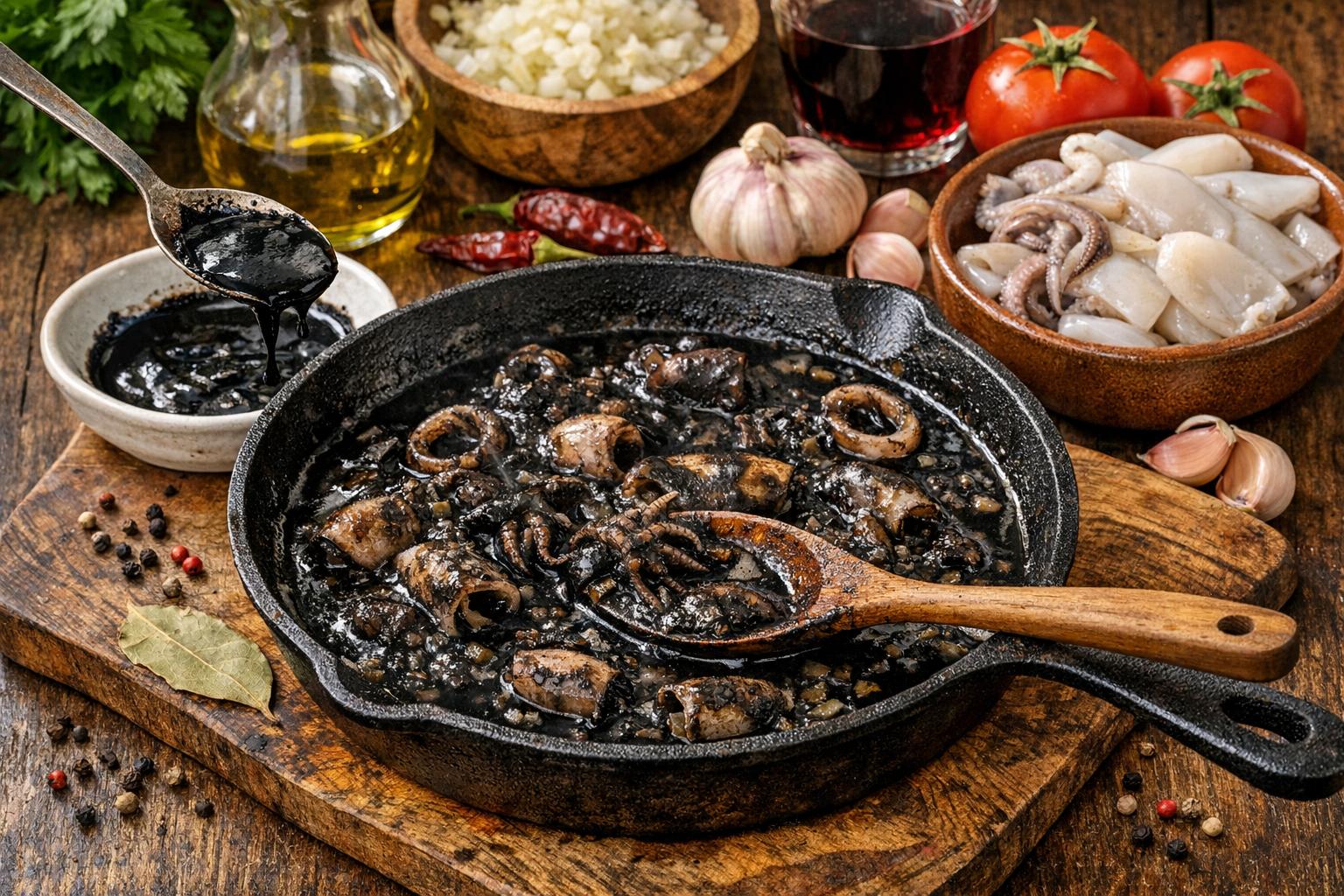
Calamares en su tinta, translated as squid cooked in its own ink, is a well-established preparation within Spanish coastal cuisine. The dish is known for its dark appearance, dense texture, and layered savory flavor derived primarily from fresh squid and the ink sacs extracted from the same animal. Although visually striking, the preparation is based on simple techniques and accessible ingredients, reflecting a broader Mediterranean approach that values freshness, careful handling of seafood, and balanced seasoning.
Across Spain, particularly in maritime regions such as the Basque Country, Galicia, and parts of Andalusia, variations of this recipe appear in both home kitchens and restaurants. Despite regional adjustments in seasoning or accompaniments, the core principle remains consistent: gently cooked squid in a sauce enriched and colored by its natural ink. The result is a dish that emphasizes maritime character without overpowering complexity.
The origins of calamares en su tinta are closely linked to Spain’s long-standing relationship with the sea. Coastal communities have relied on fishing not only as an economic activity but also as a defining cultural influence. Squid has long been abundant in the waters surrounding the Iberian Peninsula, particularly in the Atlantic and Mediterranean zones. Utilizing the entire animal, including the ink, reflects traditional values of minimizing waste and maximizing available resources.
Ink-based preparations are not unique to Spain; similar dishes exist in Italy and other Mediterranean countries. However, Spanish versions developed distinct characteristics through local ingredients, especially the consistent use of olive oil, wine, and occasionally tomato. Over time, the dish evolved from a practical fisherman’s meal into a staple of regional gastronomy. It is now regularly featured on restaurant menus and in culinary literature as a representative seafood preparation.
In contemporary Spain, calamares en su tinta may be served as part of a multi-course meal, as a main dish accompanied by rice, or in smaller portions as part of a tapas selection. Its adaptability has allowed it to remain relevant in both traditional and modern culinary settings.
The quality of calamares en su tinta depends heavily on the freshness and handling of its key components. Each ingredient plays a specific functional role in building structure, aroma, and flavor.
Fresh squid forms the basis of the dish. Smaller squid are often preferred because they tend to be more tender, although medium-sized specimens are also suitable when cooked properly. The flesh should be firm and moist, with a clean ocean scent. The squid provides mild sweetness and a firm yet delicate texture when handled correctly.
Squid ink is essential to both flavor and presentation. It contributes a dark, almost black color and introduces subtle saline and mineral characteristics. Contrary to common assumption, squid ink is not intensely “fishy.” Instead, it enhances umami depth and binds the sauce into a cohesive whole. When fresh ink is unavailable, packaged ink sachets are commonly used; these are widely distributed and offer reliable results.
Onions create a foundational sweetness through slow cooking. Their role is to soften the sharp edges of the ink and seafood, giving the sauce body and roundness. Finely chopped onions dissolve partially during cooking, contributing to thickness.
Garlic reinforces the aromatic base. Used in moderate quantity, it complements rather than dominates the dish.
Olive oil acts as both cooking medium and flavor carrier. A mild or medium-intensity extra virgin olive oil is typically suitable, as excessively robust varieties may distract from the seafood.
White wine introduces controlled acidity, which balances sweetness from the onions and tomatoes while supporting the marine notes of the squid. Dry white wines are traditionally preferred.
Tomatoes, either fresh or in small quantities of crushed canned tomato, add mild sweetness and natural acidity. In some regional variants, tomato is reduced or omitted entirely, producing a darker and more intensely marine profile.
Seasonings are typically restrained. Salt and black pepper are used judiciously, recognizing that the ink already provides salinity. Some cooks incorporate a small amount of fish stock to adjust texture and flavor concentration.
Proper preparation of squid significantly influences the final texture. Fresh squid should be cleaned by gently separating the head and tentacles from the body. The internal quill, viscera, and ink sac are removed carefully. If handling whole squid, it is advisable to separate and reserve the ink sac intact. The outer thin skin can be peeled away, although it is not mandatory if it is clean and intact.
After cleaning, the body is typically sliced into rings of uniform thickness. The tentacles may also be included. Uniform cutting ensures even cooking and consistent texture. Squid cooks quickly, and improper heat management can result in rubbery flesh. Two approaches generally produce tender results: very brief high-heat cooking or longer gentle simmering. Calamares en su tinta follows the latter approach, allowing squid to tenderize gradually within the sauce.
Before cooking, the squid should be patted dry to minimize excess moisture, enabling better integration with the sautéed base. Light seasoning at this stage is optional.
The preparation begins with gently heating olive oil in a heavy skillet or wide saucepan. Even heat distribution is beneficial, as the sauce requires a slow, controlled simmer. Finely chopped onions are added first and cooked over medium to low heat. The objective is translucency and softness rather than browning. Caramelization would introduce dominant sweet notes that could interfere with the intended flavor balance.
After the onions soften, garlic is incorporated and sautéed briefly. Garlic burns easily, so it should be stirred constantly and cooked only until fragrant. This stage establishes a neutral but aromatic base capable of supporting the more assertive ink.
Once the aromatics are prepared, the cleaned squid pieces are added. Contact with the hot pan initially causes them to release moisture. Gentle stirring ensures even contact with the oil and aromatics. Within minutes, the squid begins turning opaque, signaling partial cooking.
The addition of white wine serves to deglaze the pan, lifting any caramelized residues from the surface and incorporating them into the sauce. Alcohol largely evaporates during the simmer, leaving behind subtle acidity and complexity. The mixture is allowed to reduce slightly before adding chopped or crushed tomatoes.
Tomatoes should be used moderately. Their role is to round the sauce and add structure, not to transform the preparation into a tomato stew. The mixture is stirred thoroughly and brought to a gentle simmer. At this phase, time becomes a central factor. A simmer of approximately ten to fifteen minutes allows the squid to begin tenderizing while the flavors integrate.
Temperature control remains important. Vigorous boiling can toughen squid and cause uneven concentration of flavors. A slow, steady simmer encourages moisture retention and gradual softening.
The defining step is the addition of squid ink. Ink sachets are usually diluted in a small amount of warm water or stock to ease distribution. When using fresh ink sacs, care must be taken to open them gently and dissolve the contents without exposing the sauce to any bitterness from ruptured membranes.
The diluted ink is poured slowly into the simmering mixture while stirring continuously. The transformation is immediate, as the sauce darkens to a deep black tone. Even distribution is essential; uneven stirring can produce streaks or inconsistent coloring.
After incorporation, the heat should remain low. The sauce thickens gradually as it reduces, and its flavor deepens. A further ten to fifteen minutes of cooking typically allows full integration. During this time, occasional stirring prevents sticking and ensures stable heat exposure.
If the sauce becomes too thick, a small addition of fish stock or water can restore balance. Conversely, if it appears thin, continued gentle reduction will achieve the desired consistency.
Well-prepared calamares en su tinta demonstrates a balance between tenderness and structural integrity. The squid should yield easily when cut but should not disintegrate. The sauce should coat each ring with a glossy sheen rather than pooling separately.
Flavor evaluation at the final stage often requires subtle adjustment. Because ink contributes salinity, additional salt should be added cautiously. Freshly ground black pepper may provide mild contrast. Some cooks include a small amount of chopped parsley at the end for visual contrast, though this remains optional and used sparingly.
The overall profile should highlight marine depth supported by gentle sweetness from cooked onions and a restrained acidic note from wine and tomato. No single component should dominate.
Calamares en su tinta is traditionally served warm rather than extremely hot. Allowing the dish to rest briefly after cooking stabilizes the sauce and improves consistency.
The most common accompaniment is plain white rice. The neutral flavor and soft texture of rice contrast effectively with the dark, concentrated sauce. Rice also absorbs excess liquid, ensuring none of the preparation is wasted. In some regions, crusty bread replaces or complements rice, functioning similarly in soaking up sauce.
Presentation is typically simple. The deep black sauce forms a visual backdrop against the pale squid. When plated with rice, the contrast between the white grains and dark sauce becomes visually distinct. Portion size varies depending on whether the dish serves as a main course or part of a larger meal.
Although the fundamental preparation remains consistent, regional adaptations appear throughout Spain. In the Basque Country, the sauce may be thicker and more concentrated, sometimes incorporating finely blended onion to achieve a smooth texture. In other areas, small diced vegetables may remain visible within the sauce.
Some variations include a modest addition of brandy alongside white wine, producing a slightly different aromatic profile. Others may incorporate bay leaf during simmering for subtle herbal notes, though the leaf is typically removed before serving.
In modern interpretations, chefs occasionally pair the dish with squid ink pasta or shape the sauce into more contemporary presentations. However, traditional versions favor straightforward plating that emphasizes substance over decoration.
From a nutritional standpoint, squid provides lean protein and essential minerals such as selenium and phosphorus. It is relatively low in fat, with most added fat coming from olive oil. Squid ink itself contains trace minerals and amino acids, though it is used in small quantities.
The overall caloric content depends on portion size and the amount of oil incorporated. When served with rice, carbohydrates increase total energy value, forming a balanced meal composed of protein, moderate fat, and complex carbohydrates.
One of the most frequent difficulties in preparing calamares en su tinta is achieving appropriate tenderness. Overcooking at high heat can produce firmness, while insufficient simmering may leave squid underdeveloped in texture. Maintaining moderate heat and allowing adequate time typically resolves both issues.
Another challenge is sauce balance. Excess tomato can shift the dish away from its characteristic identity, while insufficient ink reduces intensity. Measured adjustments and tasting during the final stages are necessary for consistency.
Distribution of ink must also be managed attentively. Uneven mixing may cause color inconsistencies or concentrated patches of flavor. Continuous gentle stirring eliminates this issue.
Calamares en su tinta represents a focused example of Spanish seafood tradition. Its distinctiveness derives not from complexity but from thoughtful integration of fewer than a dozen ingredients. Fresh squid, carefully handled squid ink, aromatic vegetables, olive oil, and restrained seasoning combine to produce a cohesive and balanced preparation.
The dish’s continued presence in both domestic and professional kitchens demonstrates its adaptability and enduring relevance. Through careful attention to ingredient quality, controlled heat, and patient simmering, calamares en su tinta offers a clear illustration of how Mediterranean culinary principles translate into a dish defined by structure, depth, and clarity of flavor.