
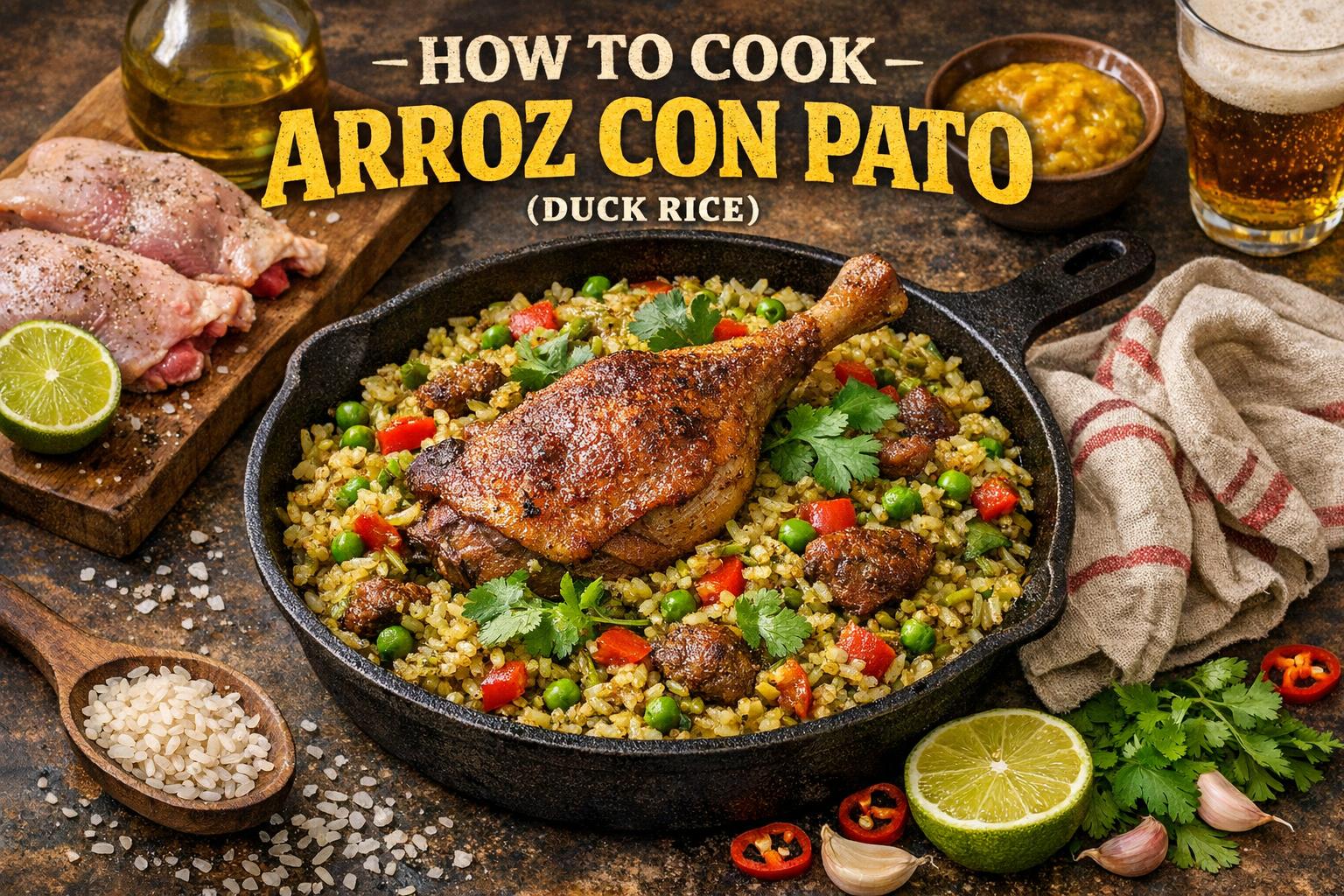
Arroz con Pato, which translates to “duck with rice,” is a classic dish in Peruvian cuisine that reflects the blending of indigenous ingredients and colonial influences. It is widely associated with the northern coastal regions of Peru, particularly the department of Lambayeque, where duck farming and rice cultivation have long been part of the agricultural landscape. The dish is recognized for its distinctive green hue, derived primarily from fresh cilantro, and for its balanced combination of savory, herbal, and mildly spicy flavors.
Unlike simpler rice dishes, Arroz con Pato involves a methodical cooking process in which the duck is first marinated and browned, and the rice is prepared with a flavorful base before the elements are combined. The inclusion of aji amarillo, a yellow chili pepper native to Peru, gives the preparation a characteristic depth and subtle heat. Although home cooks and professional chefs may follow slightly different techniques, the essential components remain consistent: duck, rice, cilantro, chili pepper, aromatics, and vegetables. The result is a cohesive dish in which the rice absorbs the rendered duck fat and seasonings, creating a unified flavor profile.
The origins of Arroz con Pato can be traced to the interaction between Spanish culinary traditions and local Peruvian ingredients. Rice and domesticated poultry were introduced during the colonial period, while indigenous herbs and peppers were already established in regional diets. Over time, local cooks integrated these elements into preparations that reflected both European technique and Andean and coastal flavors.
In northern Peru, where irrigation systems support rice paddies and livestock farms, the pairing of duck and rice became practical as well as customary. The dish gradually gained prominence and is now served during family gatherings, regional celebrations, and restaurant service throughout the country. Although it is considered substantial enough for festive meals, it is also prepared as a main course for weekend lunches in many households.
Preparing authentic Arroz con Pato requires attention to ingredient quality. The primary component is duck pieces, most commonly legs and thighs because their higher fat content and connective tissue respond well to slow cooking. Breast meat can be used, but it requires careful timing to prevent dryness.
Long-grain rice is typically selected for its ability to remain separate and firm after cooking. Medium-grain varieties may produce a softer texture, which some cooks prefer, but excessively starchy rice can result in a dense consistency. Thorough rinsing of the grains before cooking helps control starch levels.
Fresh cilantro is indispensable, providing both color and aroma. It is usually blended or finely chopped to create a vivid green base. Aji amarillo paste contributes mild heat and a slightly fruity note. When unavailable, substitutes such as yellow chili paste or a blend of mild chili and bell pepper may approximate the color, though the flavor will differ.
Light beer is commonly used for marinating and sometimes for cooking the rice, as its mild bitterness balances the richness of duck. Garlic, onion, and a small amount of cumin form the aromatic foundation. Vegetables such as peas and red bell pepper add texture and visual contrast. Olive oil or another neutral oil is used for sautéing, and seasoning is adjusted with salt and black pepper.
Proper preparation of the duck is central to the final texture of the dish. Fresh duck should have firm flesh and an even layer of fat beneath the skin. If frozen, it should be thawed gradually under refrigeration to maintain moisture.
Before marinating, excess surface moisture is removed with paper towels. Some cooks trim surplus fat to reduce greasiness, while others retain it to enhance flavor. Scoring the skin lightly can help render fat during browning, but deep cuts should be avoided to prevent moisture loss.
The marinade typically combines light beer, minced garlic, salt, and pepper. The duck is placed in this mixture for at least one hour, though longer marination—up to overnight—allows deeper penetration of flavor. The beer’s mild acidity contributes to tenderization, while the aromatics season the meat.
The defining characteristic of Arroz con Pato lies in its aromatic base, sometimes referred to as a sofrito. Finely chopped or blended onion and garlic are sautéed in heated olive oil until translucent and lightly golden. This stage builds foundational sweetness and aroma.
Aji amarillo paste is then incorporated and cooked briefly to remove any raw taste. The paste releases oils that intensify both color and fragrance. Fresh cilantro, either blended with a small amount of liquid or finely minced, is stirred in next. The mixture takes on a deep green tone, which will later permeate the rice. Controlled heat is important to prevent bitterness or discoloration.
The rice preparation involves measured liquid and careful timing. After rinsing until the water runs clear, the grains are drained thoroughly. They are then added to the aromatic base, allowing each grain to become coated in the mixture. This step improves flavor absorption and helps maintain separation during cooking.
Water, broth, or a combination of broth and reserved marinade is added in proportion to the quantity of rice. The liquid is brought to a steady simmer rather than a vigorous boil. Once the liquid level drops below the rice surface, the heat is reduced and the pot covered securely. Maintaining consistent low heat ensures even cooking without scorching.
The rice should become tender while retaining slight firmness. Excess stirring is avoided to prevent breaking the grains. At this stage, the peas and sliced red bell pepper may be folded in gently, allowing them to cook through without losing structure.
After marination, the duck pieces are removed and patted dry, reserving the liquid. Drying the surface promotes proper browning. A heavy pan is heated, and a small quantity of olive oil is added. The duck is placed skin-side down first, allowing fat to render gradually. Browning should proceed at medium heat to develop color without burning.
Once browned on all sides, the duck is removed temporarily. Excess fat may be drained if necessary, though a moderate amount enhances overall flavor. The reserved marinade is strained and added to the same pan, along with additional aji amarillo paste and a pinch of cumin. This mixture is reduced slightly to concentrate its flavor and to eliminate any raw alcohol content.
To complete the dish, the partially cooked rice and aromatic mixture are transferred to a wide, heavy pot if not already prepared in one. The browned duck pieces are arranged on top, skin side upward. The reduced marinade is poured evenly over the contents. Additional liquid may be added if needed to ensure gentle braising.
The pot is covered and maintained at low heat. During this phase, the duck finishes cooking while the rice absorbs remaining moisture and rendered fat. The cooking time varies depending on the size of the duck pieces but generally ranges from thirty to forty-five minutes. The internal temperature of the duck should reach a safe level while remaining moist.
When fully cooked, the dish is allowed to rest briefly before serving. Resting permits the rice to settle and the juices to redistribute within the meat. The final texture should show distinct rice grains infused with green coloring and evenly cooked duck that is tender but not falling apart.
Although northern Peru is most closely associated with Arroz con Pato, regional adaptations exist. Some versions incorporate grated carrots or corn for added sweetness and texture. Others replace beer with chicha de jora, a traditional fermented corn beverage, for a more localized character. The level of heat from aji amarillo may vary according to preference, and additional herbs such as parsley are occasionally included alongside cilantro.
In contemporary restaurants, chefs may refine presentation by separating the duck and rice before plating or by crisping the duck skin under high heat just prior to service. Despite these adjustments, the essential method of combining seasoned rice with braised duck remains consistent.
Arroz con Pato is typically served as a main course. Portions include a piece of duck placed over or beside a mound of green rice. Traditional accompaniments may include a simple salad of lettuce and sliced onion dressed with lime juice and salt. The acidity contrasts with the richness of the duck and complements the herbal flavors of the rice.
Some households serve the dish with salsa criolla, a condiment prepared from thinly sliced red onions, chili, lime juice, and cilantro. This addition provides freshness and textural contrast without overshadowing the primary components. Beverage pairings are generally mild and intended to balance the seasoning rather than dominate it.
Leftover Arroz con Pato should be cooled to room temperature promptly and then refrigerated in an airtight container. Proper storage maintains food safety and prevents moisture loss. The dish can be kept under refrigeration for up to three days.
Reheating is best accomplished over gentle heat with a small addition of water or broth to prevent dryness. Covering the pot while reheating helps retain steam and restore moisture to the rice. Microwave reheating is possible but should be done gradually, stirring intermittently for even warming.
Duck meat contains higher fat content than many other poultry options, contributing to the richness of the dish. However, duck also provides protein, iron, and essential vitamins. The inclusion of vegetables and herbs adds dietary fiber and micronutrients. Portion control and balanced accompaniments can moderate overall calorie intake.
The use of fresh cilantro and chili peppers introduces antioxidants, while rice supplies carbohydrates necessary for energy. Adjusting the ratio of duck to rice or trimming excess fat can modify nutritional values according to dietary requirements.
Arroz con Pato represents a structured approach to combining poultry, rice, and regional seasonings in a single cohesive preparation. Its method emphasizes gradual layering of flavors through marination, browning, sautéing, and controlled simmering. The green rice infused with cilantro and aji amarillo distinguishes the dish visually and aromatically, while the duck provides depth and substance.
Through careful ingredient selection and attention to technique, the preparation yields a balanced and integrated result. As part of Peru’s culinary repertoire, Arroz con Pato illustrates how local products and historical influences converge in a dish that remains relevant in both domestic kitchens and professional settings.