
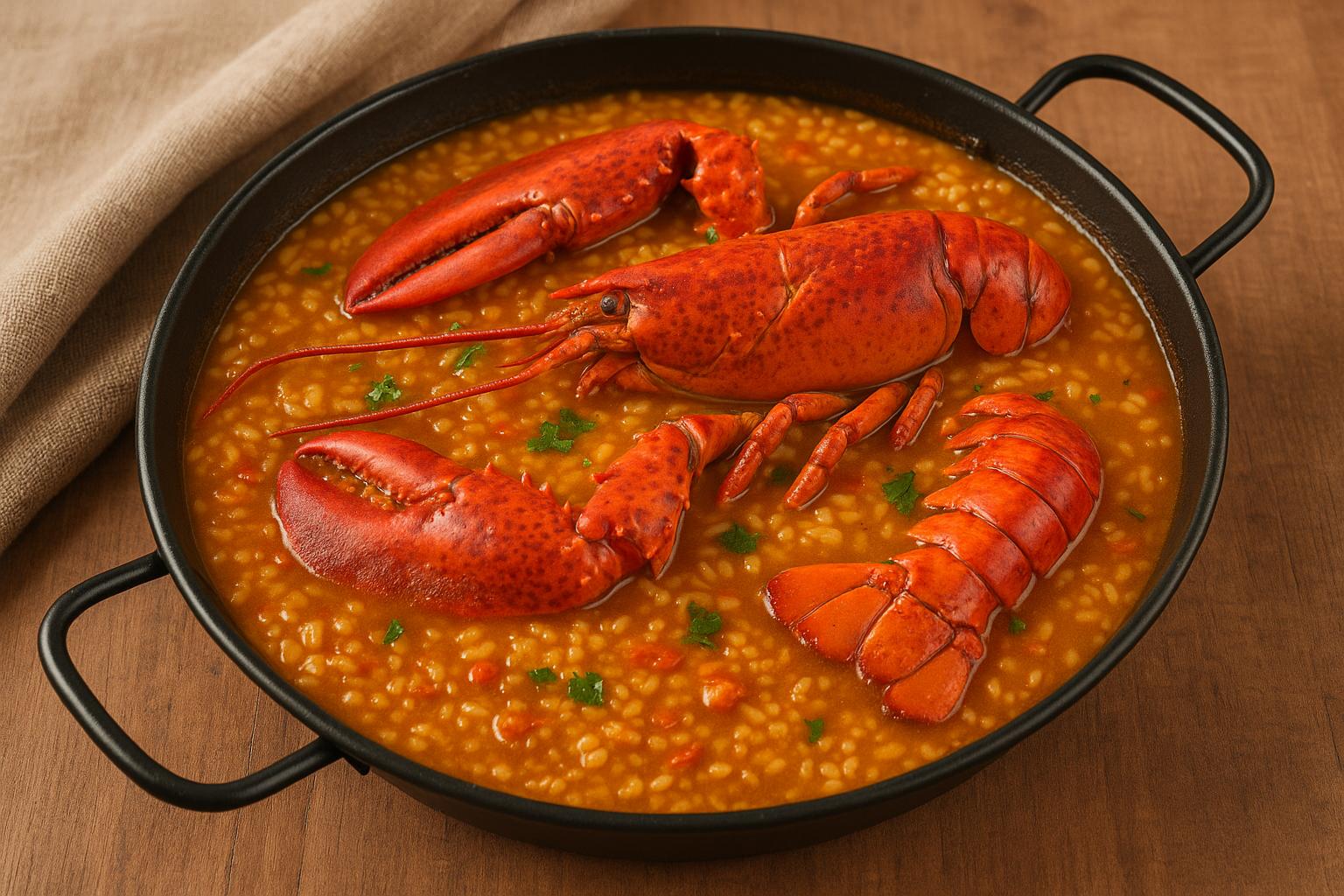
Arroz con bogavante, commonly known as lobster rice, holds a cherished position in the culinary traditions of Spain and Portugal. This delightful dish is deeply rooted in coastal areas, where the availability of fresh seafood has significantly influenced local food culture. While various regions have their distinctive takes on this dish, the fundamental concept of arroz con bogavante showcases its cultural vitality, often reserved for special occasions due to the premium nature of lobsters.
The inception of arroz con bogavante traces back to specific coastal regions, notably Catalonia and Valencia in Spain, and selected coastal parts of Portugal. These areas are not only pivotal for their marine activities but also for their culinary traditions that prominently feature seafood.
A significant influence on the creation of rice and seafood combinations, including arroz con bogavante, is the traditional Spanish paella. Both dishes exemplify a profound understanding of using the sea’s bounty, combined with locally grown products. The cultural currency of arroz con bogavante is underscored by its frequent appearance at festivities and gatherings, symbols of maritime abundance and culinary sophistication.
The mainstay of arroz con bogavante is the use of fresh, whole lobsters. Crafting this dish involves integrating an array of ingredients that collectively create a harmonious flavor. Bomba rice, prized for its ability to absorb liquids without losing its texture, is the standard choice, complemented by a flavor-intensive fish or seafood broth.
The essential preparation begins with sautéing lobster pieces alongside diced onions, tomatoes, and garlic to build an aromatic base. Paprika and parsley add depth, while a hint of saffron is indispensable for infusing the dish with a warm yellow color and unique taste. The cooking process is a delicate balance that requires the rice to absorb the seafood broth gradually, warmly embracing the richness imparted by the lobster.
While there is a standard method of preparing arroz con bogavante, regional adaptations exist, adding diversity to this classic dish. For instance, some variations might introduce additional seafood such as shrimp or clams, creating a more robust seafood palette. In contrast, regions with specific culinary influences might include variants using red or green peppers to add vibrancy and subtle contrasts to the core flavors.
The incorporation of regional spices or herbs can shift the flavor dynamics, subtly yet significantly, allowing each locality to put its signature on the classic recipe. These variations showcase the creativity embedded in regional cuisines, offering a multifaceted exploration of the dish as one travels through different areas.
Traditionally served as a communal dish, arroz con bogavante transforms dining into a shared experience. The lobsters, elegantly displayed atop the rice, create a delightful visual impression that promises a feast. The dish is typically paired with local wines, enriching the dining experience through culinary harmony.
The communal nature of this dish is emblematic of Spanish and Portuguese traditions, where meals serve as a conduit for connection and celebration. Whether indulging in arroz con bogavante at a local restaurant or during a family gathering, the experience is not only about savoring flavors but also embracing a cultural moment.
For culinary enthusiasts eager to delve deeper into Spanish or Portuguese gastronomy, immersing oneself in local food scenes offers an insightful exploration. Visiting the Mediterranean coast provides an opportunity to taste authentic versions of this dish. Alternatively, food tourism websites and cooking classes focused on local cuisines present additional avenues to appreciate and understand this dish’s rich history and its place in contemporary culinary practices.