
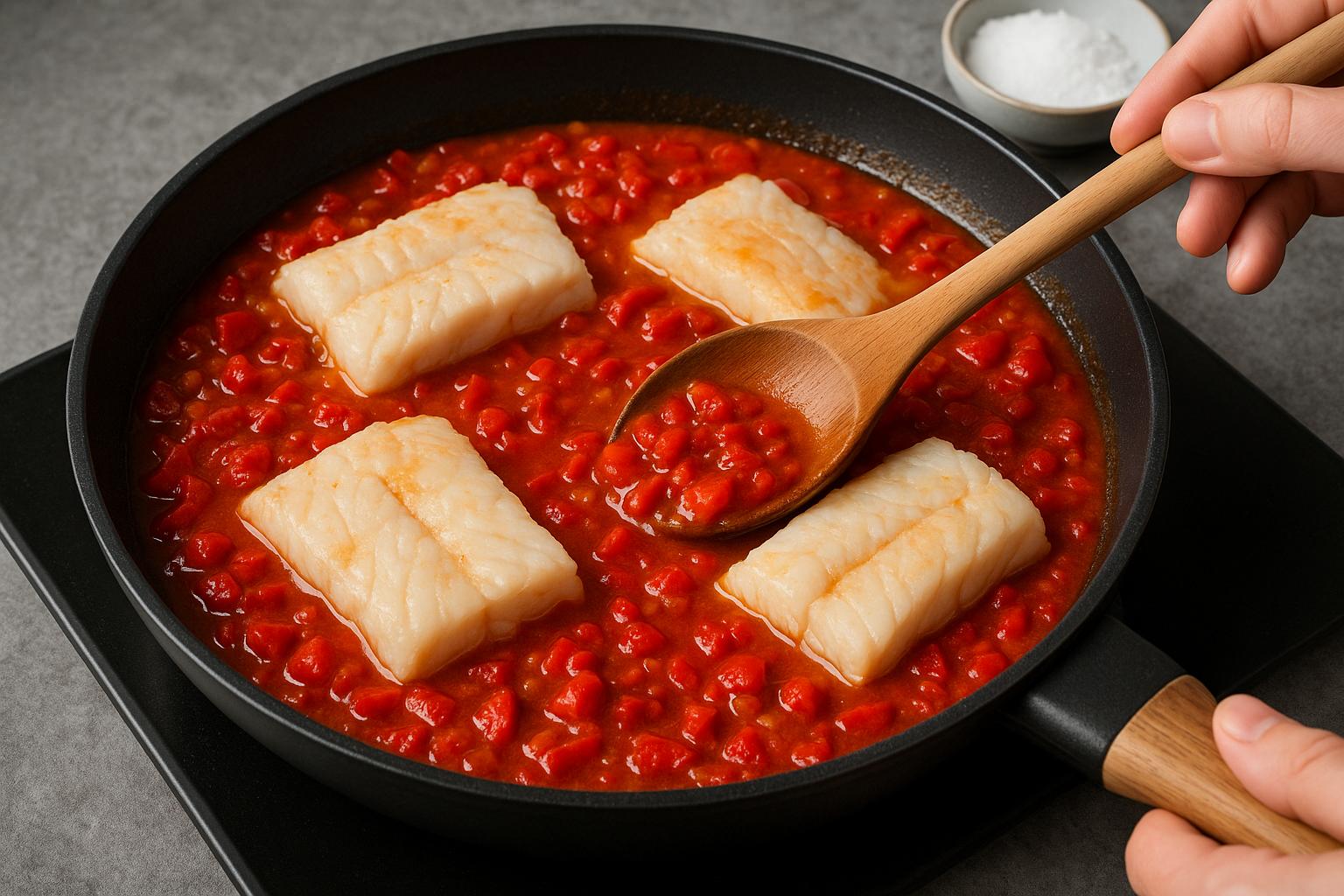
Bacalao a la Vizcaína is a renowned delicacy originating from the Basque Country in Spain. This dish is celebrated for its unique flavor profile, primarily driven by the use of dried and salted cod, known as bacalao, which is meticulously prepared in a rich and vibrant pepper sauce. Recognized not only for its taste but also for its cultural significance, it is frequently associated with festive celebrations and special occasions in Spain.
The creation of Bacalao a la Vizcaína demands an assortment of essential ingredients, each contributing to its distinctive taste and texture.
Bacalao (Salted Cod): This is the cornerstone of the dish, and selecting high-quality dried and salted cod is paramount. The bacalao’s characteristic salty flavor must be adjusted correctly to enhance the other components of the dish.
Red Peppers: Red bell peppers are indispensable for crafting the sauce, imparting not just sweetness but also a slight smokiness that is integral to the dish’s signature flavor.
Garlic and Onions: These elements form the foundational base of the sauce, adding depth and a rich complexity. Their flavor develops during cooking, providing a savory underpinning to the other ingredients.
Olive Oil: A fundamental ingredient in Spanish cuisine, olive oil is employed for sautéing the aromatics and peppers, offering a rich mouthfeel and enhancing the dish’s overall flavor.
Tomatoes: Fresh or canned tomatoes contribute a touch of acidity, which balances the richness and complements the sweetness of the peppers. This helps integrate all the flavors harmoniously.
Preparing Bacalao a la Vizcaína involves several critical stages, each requiring attention to detail to balance the flavors efficiently.
Desalting the Bacalao: The desalting process is crucial. Since the cod is heavily preserved in salt, desalting is imperative to prepare it for cooking. This involves soaking the bacalao in water for at least 24 to 48 hours, during which the water is changed multiple times to effectively draw out the excess salt.
Creating the Pepper Sauce: The sauce’s creation begins with sautéing chopped onions and minced garlic in olive oil until they reach a translucent state. This step is fundamental as it forms the aromatically rich base upon which the sauce is built. Diced red peppers are then added, with careful attention to their softness; this ensures their sweetness is fully developed. Incorporating chopped tomatoes into the mix introduces a tartness and richness, achieving a thick and robust sauce. The sauce is seasoned with salt and pepper to fine-tune the flavors.
Cooking the Bacalao: When the cod is sufficiently desalinated, it should be cut into manageable portions for the subsequent cooking. For those seeking an additional depth of flavor, lightly searing the cod in a pan with olive oil can help seal in flavors. The bacalao is then gently immersed into the simmering pepper sauce, where it is cooked to tenderness, ensuring that it becomes flaky and absorbs the sauce’s complex flavors.
Bacalao a la Vizcaína is traditionally complemented by crusty bread, which serves as an excellent accompaniment for soaking up the rich sauce. Another popular accompaniment is boiled or roasted potatoes, offering a simple yet satisfying pairing. A light, fresh green salad can provide a refreshing contrast, balancing the dish’s richness with its crisp texture and vibrant flavor profile. To elevate the dining experience, pair the dish with a light, dry white wine, which enhances the fish’s subtle nuances without overshadowing them.
Bacalao a la Vizcaína embodies the spirit of Spanish culinary tradition, merging the simplicity of its primary ingredients with the intricacy of its flavors. Achieving the right balance between the saltiness inherent in the bacalao and the complex sweetness and acidity of the sauce is key to mastering this dish and delivering an authentic taste experience. Bacalao a la Vizcaína offers a gateway for those interested in exploring Spanish gastronomy, providing a rewarding venture into Basque culinary practices. For further exploration into traditional Spanish cuisine, consider resources from culinary institutions or delve into region-specific food blogs that offer additional insights into the rich array of dishes originating from the Basque Country.